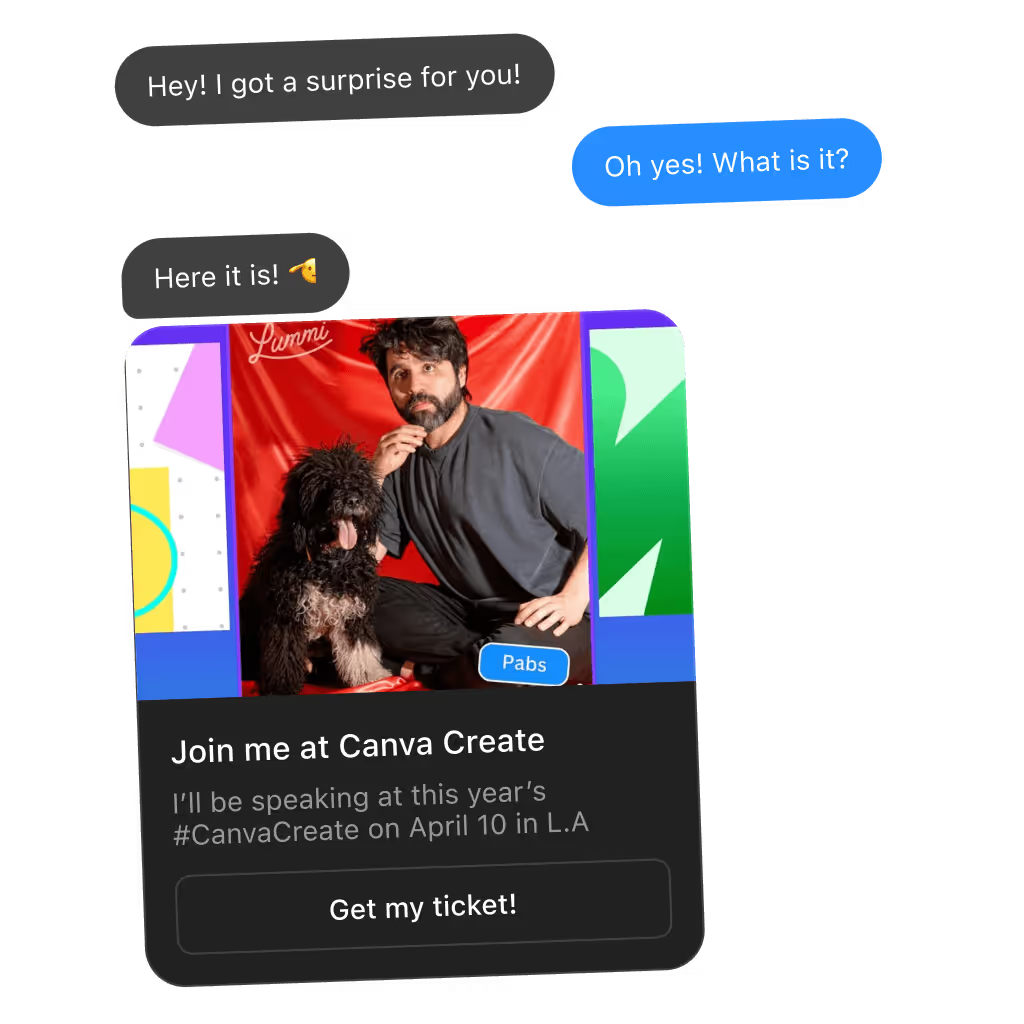
Plan your link in bio DM funnel
What counts as a link in bio alternative?
A link in bio alternative is any way of routing profile visitors somewhere other than a menu page of links: Instagram's own profile links, one direct link, or a DM entry point that opens a conversation instead of a page. The choice is not a design preference. It turns on whether a visitor can finish the job without asking you anything.
Sort your destinations by that test. A checkout, a download or a signup is self-serve and belongs on a link. Anything that stalls on a question belongs in a conversation, and reach is why that difference compounds: an organic post reaches 5 to 15% of your followers, while DM campaigns in our own July 2026 data top out at a 90% open rate.
How the planner works
- List your destinations. Add everything your one bio link is being asked to do, from checkout to booking to support.
- Mark each one. Self-serve if a visitor can finish alone, question first if they usually ask you something.
- Read the split. You get the lead destination, a keyword for each DM flow, and a copyable funnel map.
What the split gives you
- One slot, one decision. Instead of ranking ten links you answer one question per destination, and the slot follows.
- Working links stay untouched. Self-serve destinations keep their direct link. Routing a finished checkout through a DM only adds a step.
- A trigger word per flow. Each question-first destination leaves with its own keyword; two offers never end up sharing a trigger.
- Proof the DM side scales. Harvey Growth, the UK property educator, captured 12,900+ contacts automatically from organic Instagram and sorted them into 96 audiences.
Every bio link benchmark measures something different
Search for a link in bio click-through benchmark and you get numbers between 1% and 95%. They do not disagree; they count different things:
No two rows share a denominator, so none of them can be averaged. Your own number is not on the table: it is external link taps divided by profile visits in your Instagram Insights. When a destination moves into DM the mechanism is a DM link built from your handle, and the follow-up is a clickable link inside the conversation.
Handling DMs by hand vs automating with Inrō
Manual DM management
Just answering as fast as you can
Warmest leads go cold before you reply
Miss everything while you're offline
No lead capture or CRM tagging
Engagement rarely turns into sales
Inrō automation
Instant replies + lead capture
Auto-reply to every comment in seconds
Works 24/7, never miss a follower
Every lead tagged in Smart Inbox & CRM
Turns engagement into booked revenue
Start free with Inrō
Before you rewire the bio link
- Put the promise in the button. Label the bio button with what happens next, Message me or Book a call; the tap becomes a decision.
- Order by value, not by novelty. Linktree's own 2023 Creator Report puts the top three links of ten at 130% higher click-through than the bottom seven, methodology unpublished.
- One keyword, one flow. Reuse a trigger across two offers and the automation cannot tell which one the person wanted, so both replies land wrong.
- Re-sort after every launch. A destination that drew questions last quarter may be self-serve now that your page answers them. Move it back.
Where bio funnels leak
Treating the page as the funnel
A link page is a menu, not a conversation, so a visitor with a question leaves without asking it.
Sorting by what you sell
The split follows how people buy, not what you sell; one product is self-serve for regulars, question first for newcomers.
Marking everything question first
Send a finished checkout into your DMs and you add a step to a sale that already worked.
Your bio link is one slot, and the question is not which page fills it. It is which of your destinations a visitor can finish alone. Self-serve destinations keep their link. Anything that stalls on a question belongs in a conversation.
Turn the plan into real flows
Inrō runs the DM half: keyword triggers, instant replies, qualification and booking on Meta's official API. The free plan covers 100 active contacts a month, 3 automations, 3 campaigns and 50 AI credits.
Start for free
Trusted by 10,000+ creators and brands
, including Walmart & Yoyomatch
Frequently asked questions
No, and this planner does not argue that it is. A link page still does one job well: it holds several self-serve destinations behind the single URL your bio shows. What it cannot do is answer a question. Someone who needs to know whether you ship to their country, whether your programme suits beginners, or what actually happens on a first call arrives at a menu and leaves, because a menu has no way to reply. So the useful question is not whether link in bio is dead. It is which of your destinations belong on a page and which belong in a conversation.
What is the best link in bio alternative?
There is no single best one, and anyone selling you a page will say otherwise. Instagram's own profile links cost nothing and need no third-party tool. One direct link beats a menu when you are promoting one thing. A DM entry point beats both when the sale stalls on a question, because it opens a conversation rather than a page. The planner above chooses between them from your destinations rather than from a preference: self-serve destinations keep a link, question-first destinations become keyword-triggered DM flows, and whichever destination you mark most valuable decides what your one bio slot points at.
How do I send people to my DMs from my bio?
Point your bio link at your own message thread instead of at a web page, and label the button so people know a conversation opens: Message me, or Book a call. Instagram uses ig.me links for this, and the Instagram DM Link Generator builds one from your handle along with a QR code for print. The planner above answers the question that comes first: whether the DM belongs in your one bio slot at all. If your most valuable destination is self-serve, the bio link stays a page and the DM entry point becomes a row on it.
Can I keep a link page and a DM funnel?
Yes, and for most accounts that is the right answer. The two are not competing formats; they carry different kinds of destination. Keep the self-serve ones on the page, ordered the way you actually want them clicked, and add one Message me row for the offers that stall on a question. Each of those offers gets its own keyword, so the automation knows which one the person meant. Inside the conversation you can still send links, which is covered separately in sending clickable links inside Instagram DMs. The planner shows the split as two lists, so you can see which destination sits where.
What is the average click-through rate on a link in bio?
There is no trustworthy average, and we went looking for one. The most quoted figure, 1 to 3%, appears on Hopp's link in bio guide, but the two numbers that page actually cites are WordStream's 2025 social advertising benchmark of 1.2% and MailerLite's 2025 email benchmark of 2.0%. Neither was measured on a bio link. A second common figure, 2 to 3%, traces to CreatorFlow, which credits an analysis of 1,200 plus campaigns from Q4 2025 without publishing the sample, the method or the data, and which sells the tool its own comparison favours. Linktree does publish real platform data, but it counts outbound clicks against Linktree page views, a denominator that only exists after somebody has already tapped your bio link.
How many links can I put in my Instagram bio?
Up to five, since April 2023, and only the first is visible without a tap. We could not quote a Meta help page: Instagram's Help Center serves a JavaScript shell to anything that is not a browser, so the trail is the announcement itself. Mark Zuckerberg posted the change on his Instagram broadcast channel on 18 April 2023, TechCrunch reported it the same day, and Adam Mosseri posted about multiple links in bio on X that week. Treat it as reported rather than documented and check the Links screen in your own app, because vendor posts in 2026 disagree about what a standard account gets today. The planner assumes one visible slot either way.
How do I know if a destination is question first?
Ask what happens the moment someone arrives ready to buy. If they can finish alone, a checkout, a download, a newsletter signup, it is self-serve and belongs on a link. If the typical visitor pauses to ask something first, whether it fits them, what is included, when you are next available, it is question first and belongs in a conversation. The honest test is your own inbox: whatever people already message you about is already question first, whether you planned it that way or not. The planner opens booking, pricing, course signups and support as question first and everything else as self-serve, because those defaults exist to be argued with.
Do DM funnels work at scale?
They can, and one published example shows the shape of it. Harvey Growth, a UK property educator, captured 12,900 plus contacts automatically from organic Instagram, sorted them into 96 audiences, and sent more than 50,000 campaign DMs at a 40 to 60% open rate through Inrō. Two things matter there: the capture is automatic, which makes the volume possible at all, and the segmentation is why a campaign that size is not spam. Numbers like these are one account's results rather than a benchmark for yours, and this page does not promise them. The planner only tells you which of your destinations would feed a flow of that shape.
Is this planner free and private?
Yes to both. The planner runs entirely in your browser: your destination list is never sent anywhere, never stored, and gone when you close the tab. There is no account, no email gate in front of the result, and no watermark on what you copy. A tool that demands your address before telling you where your bio link should point has made exactly the mistake this page is about, putting a form in front of an answer. Inrō built it as a free tool from an Instagram DM automation platform, so the plan describes flows Inrō can run, but nothing about it needs the product. Copy the plan and build it anywhere.
Kshitij runs the growth experiments and looks after client success from first trial to enterprise rollout at Inrō. The advice in these tools comes from funnels he has tested on real accounts, and from the support tickets that follow when a setup goes wrong.