How this sequence planner works
- Name the trigger. Say what opened the thread: a comment keyword, a story reply or a tap on your DM link.
- Set one goal. Book a call, make a sale or deliver a freebie, since only the ask step changes.
- Pick the length. Three, four or five messages, each with its purpose and its place in the window.
Why the order and the clock matter
- Every message has a job. Deliver, qualify, value, ask, follow up. One ask per sequence. Nothing reads like one pitch sent four times.
- Timings you can defend. Nothing is scheduled past 20 hours, because Meta counts its 24 from their message and not from yours.
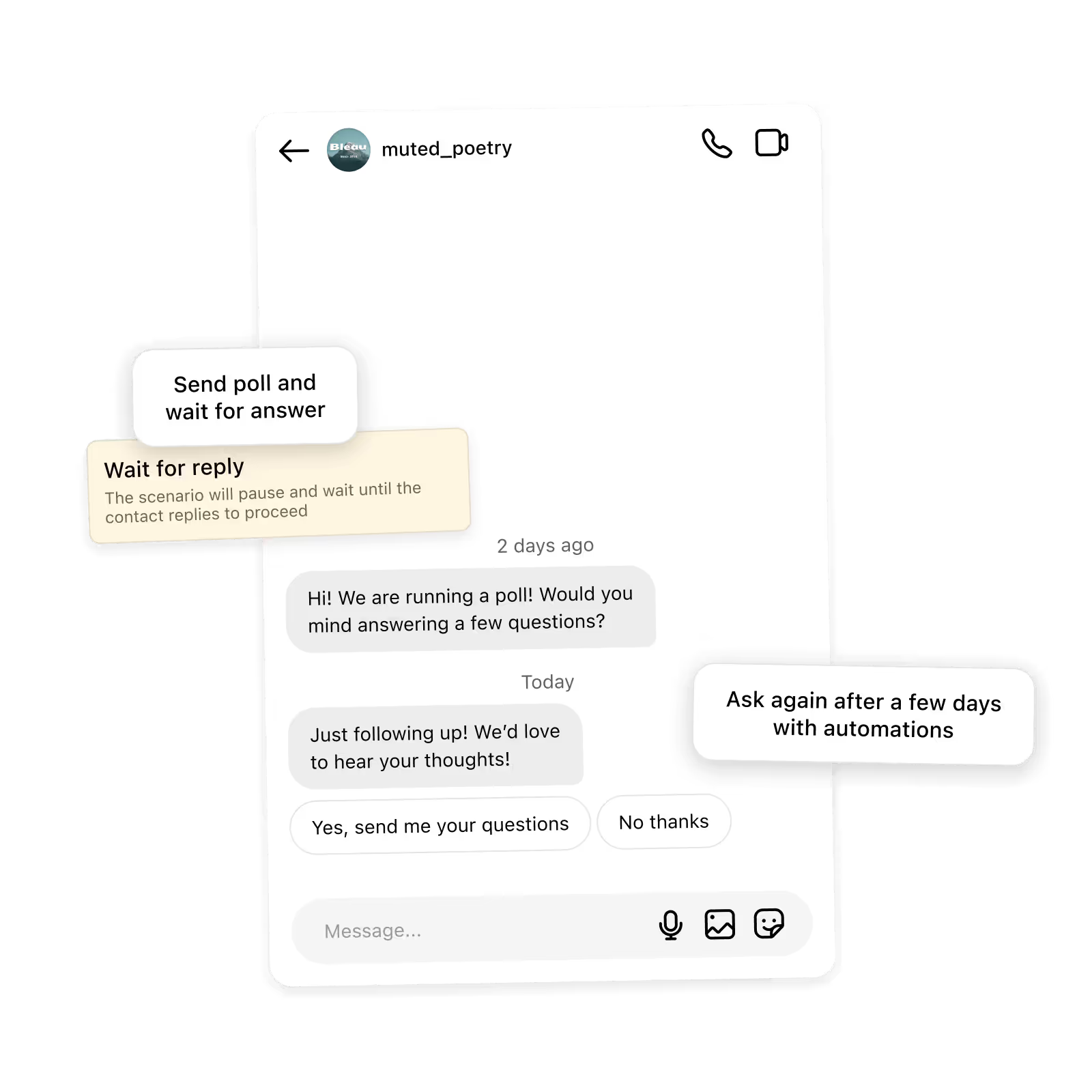
- It maps onto a real automation. Each step is a time delay or a wait for reply, the two flow control actions in Inrō's builder.
- One place to start. Plan the arc here, then write any single message out in the DM script generator.
What Meta documents about a second message
We read nine popular Instagram DM sequence and welcome message template guides in August 2026. Between them they publish more than 230 ready-made messages, and not one names a sending window or links to Meta's rules. Here are those rules, in Meta's own words.
Rows three to five separate Instagram from Messenger: both official routes past a closed window are unavailable on Instagram. Their reply is the only thing that buys time.
Handling DMs by hand vs automating with Inrō
Manual DM management
Just answering as fast as you can
Warmest leads go cold before you reply
Miss everything while you're offline
No lead capture or CRM tagging
Engagement rarely turns into sales
Inrō automation
Instant replies + lead capture
Auto-reply to every comment in seconds
Works 24/7, never miss a follower
Every lead tagged in Smart Inbox & CRM
Turns engagement into booked revenue
Start free with Inrō
What keeps a sequence human
- Space the first two messages. A 30 to 60 second gap between back-to-back messages is our own flow control advice; instant ones read as automated.
- End every message on a question. The question is what buys you the next step: their reply starts a fresh 24 hours.
- Set a timeout on every wait. Inrō's wait for reply step carries a timeout branch, and a quiet contact leaves the flow.
- Save the answer, not just the reply. Inrō can save an Ask a question answer to a contact property, and the next message uses it.
Where a sequence loses the thread
Sending it all at once
Four messages in four seconds read as a machine and burn the one reply the sequence needed to continue.
Planning day two and day three
Nothing automated reaches them 48 hours after their message unless they reply, so a day two step is a wish.
Asking in every message
One ask per sequence. The other steps exist to earn the reply that keeps the window open.
A DM sequence is a timing plan before it is a set of messages. Meta gives you 24 hours from their message, and on Instagram there is no documented way to buy more, so every step either fits inside that day or earns a reply.
Run this sequence automatically
Paste each message into an Inrō automation with a time delay or a wait for reply between them, on Meta's official API. The free plan covers 100 active contacts a month, 3 automations, 3 campaigns and 50 AI credits.
Start for free
Trusted by 10,000+ creators and brands
, including Walmart & Yoyomatch
Frequently asked questions
How many messages should an Instagram DM sequence have?
Three to five, and the number matters less than what each one is for. Three is the shortest arc that works: deliver what you promised, ask one question, make one ask. Four adds a value step between the question and the ask, and that is the version most people should run. Five only works if they reply, because the fifth message here waits for that reply instead of being scheduled. Past five you are repeating yourself inside a single day, since Meta gives you 24 hours from their message. Pick the length by how much you have to say, then cut one message.
How far apart should the messages be?
Close together at the start, then wide. This planner sends the first message immediately, the second one minute later, the third at three hours and the fourth at twenty. The one minute gap follows our flow control reference, which advises a 30 to 60 second delay between back-to-back messages so consecutive DMs don't read as a machine. The three and twenty hour marks are our own spacing, with one hard constraint behind them: Meta's standard messaging window runs 24 hours from their message, so stopping at twenty leaves four hours for a late reply.
Can I keep messaging after 24 hours?
Not automatically, and not on Instagram. Meta's Messenger Platform policy documents three ways past the standard window and rules two of them out here: "Sponsored messages are not available for IG Messaging API" and "One-time notifications are not available for IG Messaging API". On the third, message tags, it says "Some message tags are available only for Messenger Platform and not IG Messaging API" (August 2026). What's left is a human agent answering by hand, which Meta's Instagram reference allows outside the window and which means a person typing, not a scheduled step. Their reply is the only thing that extends an automated sequence.
Can I auto-send a welcome DM to every new follower?
Not through Meta's API, whatever the template lists say. The Instagram messaging reference is explicit: "Only after an Instagram user has sent your app user's Instagram professional account a message can your app send a message to the Instagram user" (August 2026). A follow is not a message, so it opens nothing. Template guides still advise sending a welcome DM 24 to 48 hours after somebody follows you, which describes a message no automation is permitted to send. What works is a welcome sequence that starts when they write first: a comment keyword, a story reply, a tap on your DM link.
What order should the messages go in?
Deliver, qualify, value, ask, and only then follow up. Deliver first, because they asked for something and making them wait insults the request. Qualify second, because one question costs them nothing and their answer restarts Meta's 24 hours, which is the only way an automated sequence buys more time. Value third, because the gap between their answer and your ask is where trust is built or skipped. Ask fourth, once, in one sentence. Follow up fifth, only if they went quiet. The order matters more than the wording: switching tone here rewrites the sentences and leaves the arc alone.
Will a DM sequence feel spammy?
It feels spammy when every message asks for something. Four messages that each push an offer is one pitch sent four times, and people read that instantly. This planner puts exactly one ask in the sequence, and the messages before it either hand over what was promised or ask a question somebody can answer in three words. Two other things help. Send the first two a minute apart rather than in the same second: instant consecutive DMs read as automated. And write the last message so that no is a comfortable answer.
What happens if they never reply?
The sequence ends, and that's the honest answer. In a four message plan every step is scheduled inside the window their first message opened, so all four land whether they answer or not. The fifth is different. It waits for a reply, because 24 hours after their last message the window is shut and Instagram offers no documented way to schedule past it. Inrō's flow control actions match that shape: wait for reply pauses the scenario until they write, and both waiting actions carry a timeout branch, so a quiet contact leaves the flow instead of freezing in it.
Where do the timings in this planner come from?
Three places, and each is labelled on the page. The 24 hour ceiling is Meta's, quoted from the Messenger Platform policy: "Businesses have up to 24 hours to respond to a user" (August 2026). The one minute gap between the first two messages is ours: our flow control reference advises a 30 to 60 second time delay between back-to-back messages. The three hour and twenty hour marks are our own judgement rather than research; nobody publishes an optimal gap between two DMs. Twenty hours is chosen for one measurable reason, that it leaves four hours of the window unspent.
Is this tool free, and does it use AI?
It is free, and no, it does not use AI. The sequence is assembled in your browser from your five inputs by plain rules: the trigger sets the opening clause, the goal sets the question and the single ask, the tone swaps wording, and the length sets the arc and the timing. Nothing is sent anywhere, nothing is stored, and there is no email gate in front of the result. That also means the words are a starting point, not a finished script. Change them until they sound like you, and keep the timings.
Kshitij runs the growth experiments and looks after client success from first trial to enterprise rollout at Inrō. The advice in these tools comes from funnels he has tested on real accounts, and from the support tickets that follow when a setup goes wrong.