What Instagram DM marketing actually is and how to run it: why the DMs are the highest-converting marketing channel you have, how it differs from automation, the four-layer system that turns engagement into revenue, and how automation and campaigns fit together.
Instagram DM marketing is the practice of using your DMs as a deliberate marketing and sales channel, not just a support inbox. It is the strategy layer above DM automation: automation handles one trigger at a time, someone comments and gets a reply, while DM marketing is the coordinated system that moves every contact through a journey from first interaction to sale. That system has four layers: capture (turn engagement into a contact you own), qualify (sort the ready from the not-ready), nurture (warm up the ones who need time), and re-engage (bring cold contacts back with a new offer). Automation and campaigns are the two engines that power those layers, and a CRM ties it together. This guide covers what DM marketing is, how it differs from automation, the four-layer system, and how to build it.
Instagram DM marketing is the practice of treating your direct messages as a deliberate marketing and sales channel, with real entry points, qualification, follow-up, and campaigns, rather than an inbox you check when you remember. That reframe matters because the DMs are the most valuable channel most accounts ignore. A message you send there gets opened around 90% of the time, far above a feed post that reaches a fraction of your followers or an email that gets opened one time in five, and it lands in the same place people talk to their friends. In other words, the DM is where attention actually becomes action: where a follower asks a question, a lead gets qualified, and a sale gets closed. DM marketing is simply the decision to run that channel on purpose, as a system, instead of leaving it to chance. Everything else on this site, the automation, the campaigns, the funnels, is a piece of this bigger picture.
These two get used interchangeably, and the difference is the whole point of this guide. DM automation is a single trigger handled automatically: someone comments a keyword and receives a DM. It is valuable, but it is one tactic, one touchpoint. DM marketing is the coordinated strategy that connects many of those touchpoints into a journey, capturing a lead, working out where they are in their decision, sending them the right message at each step, and following up until they convert or go cold. Put simply, a single comment-to-DM flow captures leads at one moment, while a DM marketing system captures them at every moment and moves each person through a sequence based on where they actually are. Automation is a tool inside the strategy, the engine that makes the individual steps run without you, but the strategy is what decides which steps exist and how they fit together. If automation is answering the door, DM marketing is the whole customer journey that starts when someone knocks.
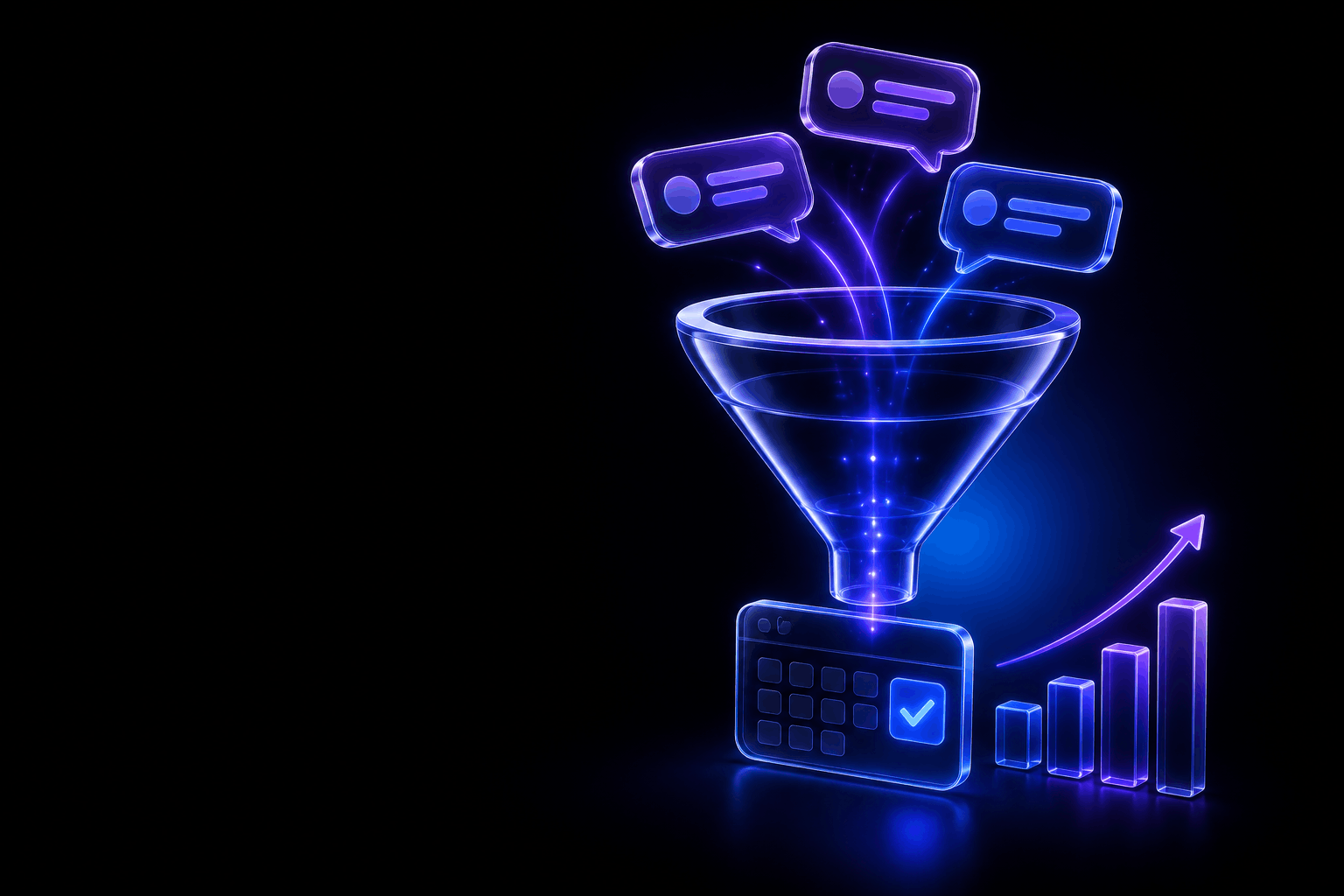
The highest-performing DM marketing runs on four layers, and every account doing this well has all four, not just the first one. Each layer has a job, and each maps to a specific part of the system.
| Layer | What it does | Covered in |
|---|---|---|
| Capture | Turn engagement into a contact you own | Lead generation and comment-to-DM |
| Qualify | Sort the ready from the not-ready | Lead qualification and the DM funnel |
| Nurture | Warm up the ones who need time | Welcome and follow-up sequences |
| Re-engage | Bring cold contacts back with a new offer | DM campaigns |
The layers are a sequence, but they are also always running at once: new people are being captured while existing leads are being nurtured and cold ones re-engaged. The mistake most accounts make is building only the first layer, a comment-to-DM trigger that captures leads, and then doing nothing with them, so the leads pile up and go cold. The value is in the whole chain. A captured lead who is qualified, nurtured, and re-engaged is worth many times one who is captured and forgotten, which is why DM marketing is a system, not a single automation.
Those four layers are powered by two engines, and understanding the split is what makes the system click. Automation is the reactive engine: it waits for someone to act, a comment, a Story reply, a DM, and responds instantly, which is how the capture, qualification, and nurture layers run without you. Campaigns are the proactive engine: you start the conversation, sending a message out to a list of contacts who already opted in, which is how the re-engagement layer works and how you launch to your existing audience. The two are complementary. Automation fills your contact list and moves people through their journey the moment they engage; campaigns reach back out to that list whenever you have something to say. One without the other is half a system: automation with no campaigns captures leads you never follow up with at scale, and campaigns with no automation means a list that was never properly built or qualified in the first place. DM marketing runs both.
Putting it together is more straightforward than it sounds, because each layer builds on the last. Start with capture: put a keyword trigger on the content you already post, so every Reel and Story turns engagement into contacts. Add qualification next, a couple of questions in the flow that sort who is ready to buy from who is just looking, so your attention goes to the right people. Then nurture the ones who are not ready with a follow-up sequence that keeps them warm, and re-engage your whole list with campaigns when you launch or have an offer. The thing that ties all four together is a CRM: every contact captured, tagged by where they came from and where they are in the journey, so nothing falls through and you can message the right segment at the right time. Build it once and it runs on every post, turning the engagement you were already earning into a pipeline of leads, customers, and a list you own. That is the difference between doing a bit of DM automation and actually running DM marketing.
It's the practice of using your Instagram DMs as a deliberate marketing and sales channel, not just a support inbox. Rather than replying to messages as they come, you run a coordinated system with entry points that capture leads, questions that qualify them, sequences that nurture them, and campaigns that re-engage them, moving each contact from first interaction to sale.
Automation is one trigger handled automatically, like someone commenting a keyword and getting a DM. That's a single tactic. DM marketing is the whole strategy that connects many such touchpoints into a journey, capturing, qualifying, nurturing, and re-engaging each contact. Automation is a tool inside DM marketing, the engine that runs the steps, while the strategy decides what those steps are.
Capture (turn engagement into a contact you own), qualify (sort the ready from the not-ready), nurture (warm up the ones who need time), and re-engage (bring cold contacts back with a new offer). The highest-performing accounts run all four at once, new people captured while existing leads are nurtured and cold ones re-engaged, rather than just capturing leads and letting them pile up.
Because it's the highest-converting channel most accounts ignore. A DM gets opened around 90% of the time, versus a fraction of your followers for a feed post and about one in five for email, and it lands where people actually pay attention. That's where a follower's question becomes a qualified lead and a sale, so running the DMs as a marketing channel captures value the feed and bio link leak.
For anything beyond a handful of conversations, yes. The capture, qualification, and nurture layers all rely on responding instantly and consistently to everyone who engages, which you can't do by hand at scale. Automation is the engine that runs those layers, and campaigns handle re-engagement. The strategy is what you design; automation is how it runs.
Start with capture: put a keyword trigger on the content you already post so engagement becomes contacts. Then add a qualifying question or two, a nurture sequence for the ones who aren't ready, and campaigns to re-engage your list. Route everything into a CRM so each contact is tagged and nothing falls through. Build the layers one at a time, and it runs on every post.
Copy a template that matches it, or describe the flow you want and let AI build it for you.


.png)